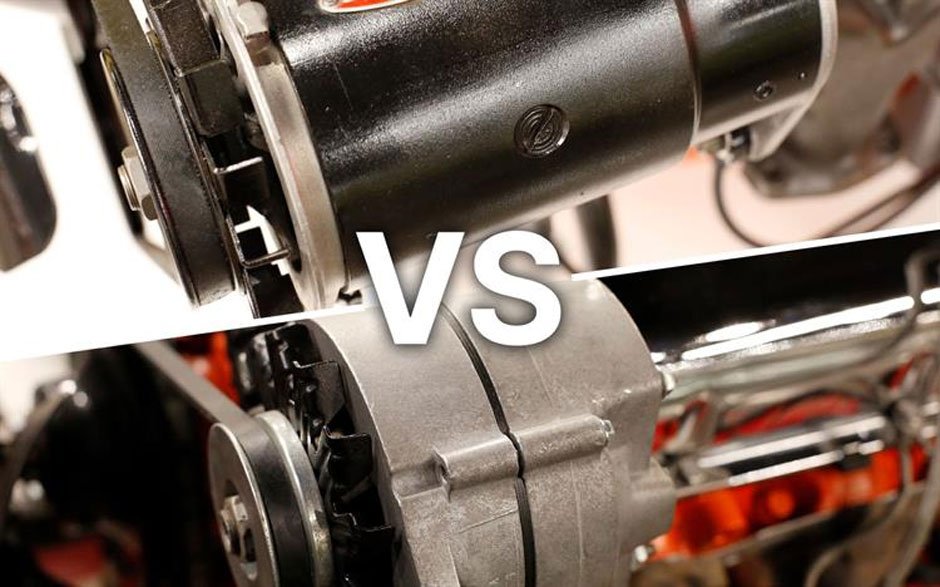
The most popular devices in as far as electricity production is concerned are alternators and generators. They appear to do the same job at the first glance, to produce power. They are however different and compatible with different applications.
Being aware of their variations will assist you in choosing the correct one in respect to the vehicles, machines, or backup systems.
This guide explains the 8 major differences between the alternators and the generators in simple language, a step that has made anyone understand how they operate, when to use them and why they are important.
What Is an Alternator?
Mechanical energy is converted to alternating current (AC) using an alternator. Modern cars are powered by it and ensure that the battery is being charged and supplying electricity to all the electrical parts.
Alternators are the ones to choose in case of high efficiency, constant output, and reduced weight. To get the best quality alternators, you may visit suppliers such as a reputed Chinese alternator supplier that provides good solutions to most uses.
What Is a Generator?
Mechanical energy can also be converted into electricity with the use of a generator, however, it may either provide AC or DC (direct current), depending on the design.
Power stations, back up power systems and older vehicles typically use generators. They have an advantage in certain areas that are particularly concerned with low-speed performance.
8 Key Differences Between Alternators and Generators
1. Type of Current Produced
Alternator:
- Produces only alternating current (AC).
- AC is later converted to DC to charge the vehicle battery.
Generator:
- Can produce AC or DC, depending on the model.
- DC generators were common in older cars.
Why This Matters: Alternators are more suitable for modern electronics because AC can be converted efficiently.
2. Efficiency
Alternator:
- Highly efficient
- Generates power even at low RPM
- Lightweight, better performance
Generator:
- Less efficient
- Needs higher RPM for stable output
Good to Know: In case fuel efficiency and performance is important, then alternators will be preferred.
3. Design and Construction
Alternator:
- Uses a rotating magnetic field
- Stator remains stationary
- It has built-in rectifier to change the AC to DC.
Generator:
- Uses a rotating coil
- Brushes and commutators wear out faster
- More mechanical friction
Impact: Alternators have fewer wearing parts and last longer.
4. Power Output
Alternator:
- Produces more power at high speeds
- Suitable for modern vehicles with many electrical systems
- Handles higher loads
Generator:
- Produces stable power at low speeds
- Good for simple electrical needs
5. Weight and Size
Alternator:
- Smaller and lighter
- Easy to install
- Ideal for compact engine bays
Generator:
- Larger and heavier
- More suitable for industrial systems
6. Maintenance Needs
Alternator:
- Requires minimal maintenance
- No commutator, fewer parts to replace
- Long life cycle
Generator:
- Needs regular maintenance
- Brushes and commutators wear out
- Often require frequent servicing
7. Cost
Alternator:
- Slightly higher upfront cost
- Lower long-term maintenance cost
Generator:
- Lower buying cost
- Higher long-term maintenance cost
8. Applications
Alternator Uses:
- Cars and trucks
- Commercial vehicles
- Agriculture machinery
- Marine engines
- Industrial machines
- Power systems (with regulators)
Generator Uses:
- Backup power systems
- Power plants
- Construction sites
- Remote areas with no electricity
- Older vehicles
In case you need decent alternators of vehicles or equipment, consider high-quality products at unitechmotor.com.
Benefits of Alternators
- Higher efficiency
- Longer lifespan
- Lower maintenance
- Stable voltage output
- Lightweight and compact
- Ideal for high-load electrical systems
Benefits of Generators
- Works well at low speeds
- Can produce both AC and DC
- Suitable for backup systems
- Good for remote power needs
Alternator vs. Generator: Comparison Table
| Feature | Alternator | Generator |
| Current Type | AC only | AC or DC |
| Efficiency | High | Medium |
| Maintenance | Low | High |
| Weight | Light | Heavy |
| Best Use | Vehicles, machinery | Backup systems, low-speed power |
| Lifespan | Long | Moderate |
| Output at Low Speed | Moderate | Strong |
Which One Should You Choose?
An alternator is best suited in case you desire something modern, efficient and durable. It is perfect with those systems that require a constant and reliable electricity.
Where low-speed power or independent electricity is needed – particularly as an emergency source of power, a generator will still be handy.
In case of quality alternators to various vehicles or machines, you may consider reliable product brands of a Chinese alternator supplier.
Conclusion
Both alternators and generators are used to convert mechanical energy into electricity, however, they are both different and have different applications.
Alternators are more effective and durable and, therefore, ideal in vehicles and contemporary machinery. Generators have not been replaced because they are still useful in backup and slow-speed operation.
Unitechmotor.com is the right place to gather superior alternators and professional assistance in case you require them in your application.
FAQs
Which is superior an alternator or a generator?
Most modern applications are best done with an alternator as it is more efficient, lighter and less maintenance. Generators are preferable in reserve power or slow-speed.
Are cars powered by alternate generators or alternators?
Moderate cars operate on alternators and the old ones operated on DC generators.
Would a generator be a substitute of an alternator?
Not usually. Designing Alternators is done on car systems whereas generators are more appropriate in standalone power.
A generator or an alternator: Which has a longer life?
The duration of alternators takes a longer time, as there are fewer worn components.